
Upcoming Events
After the Washington, D.C., trip, students must complete the following:
1. Program Evaluation
Complete a short program evaluation describing how the trip contributed to your academic learning and professional development. You should also provide thoughtful suggestions for improving future trips.
2. Research Essay
Write an essay addressing a specific research question inspired by what you learned during the program. Your essay should present a clear argument supported by relevant evidence, examples, and insights from the trip.
Publication Notice: Your essay will be published on the Delali Economic Institute website. Proofread your work carefully and ensure that it is accurate, professional, and suitable for public viewing before submitting it.
Washington, DC Educational Field Trip
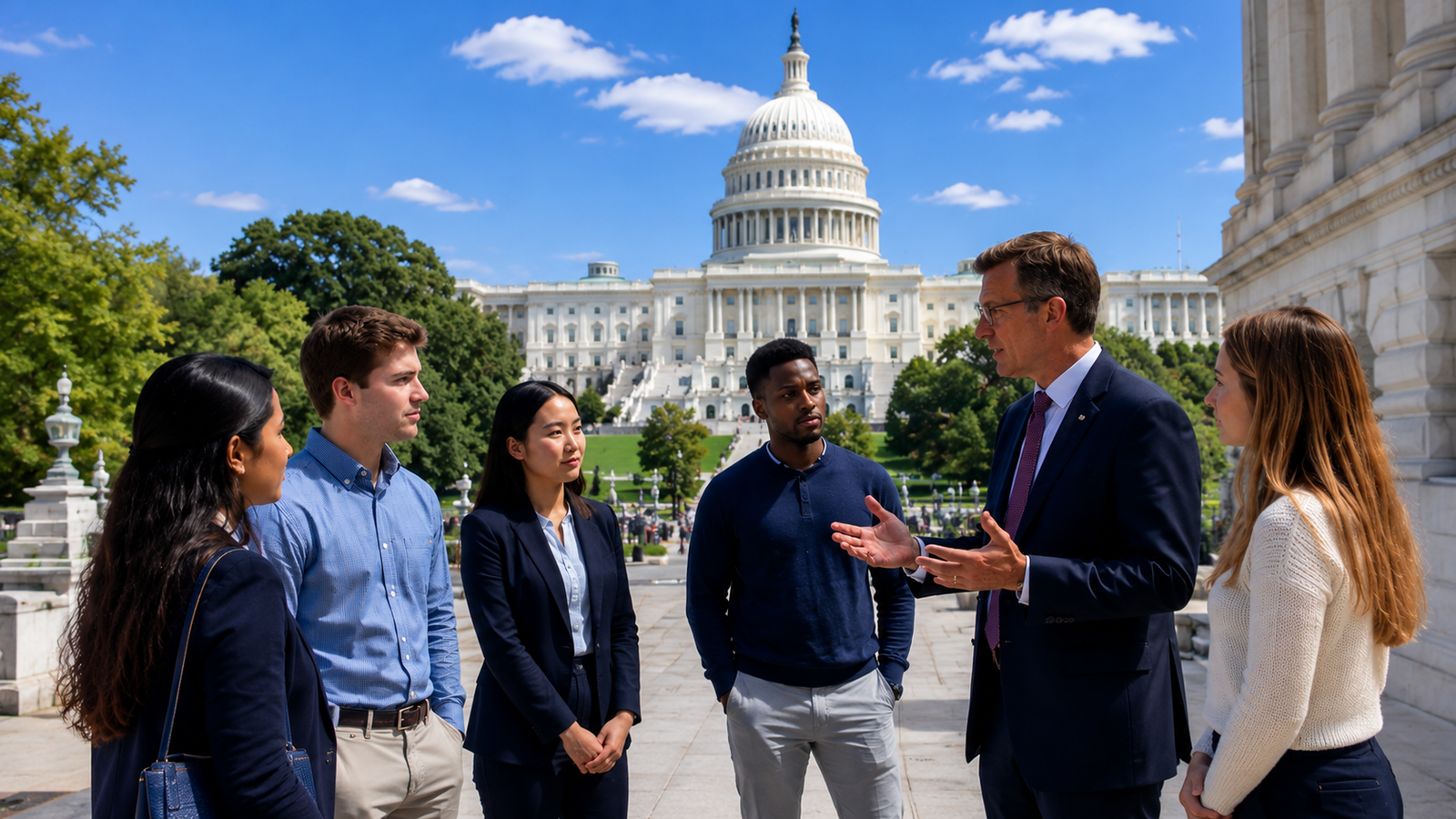
This educational field trip to Washington, DC, is part of a broader initiative commemorating the 250th anniversary of the United States and examining the ideas and institutions that have shaped the American experiment. Through direct engagement with leading policy institutions, scholars, and practitioners, students will explore how principles such as free markets, individual liberty, the rule of law, property rights, and free enterprise have contributed to American economic and civic life and consider their continuing relevance to contemporary policy challenges. The trip is designed as an experiential learning opportunity that extends intellectual engagement beyond the classroom. Students will participate in institutional visits, policy discussions, and conversations with scholars and practitioners in Washington, DC. These experiences will allow students to connect economic and political ideas with the institutions and policy debates through which those ideas are applied in practice.
This is a highly selective program with limited space. Selected students are expected to participate fully in all scheduled activities, engage seriously and respectfully with speakers and other participants, ask thoughtful questions, and approach the trip as an academic and professional learning experience. Following the trip, each student will complete an essay addressing a specific research question based on what they learned during the program. The essay will require students to draw on their institutional visits, discussions with scholars and practitioners, and other experiences in Washington to develop and defend an argument connecting the principles examined during the trip to a contemporary economic or public-policy issue. Students will also complete a brief program evaluation survey. Program outcomes will be assessed through the quality of student essays, evidence of intellectual engagement during the trip, and responses to the post-trip evaluation survey.
Flight, accommodation, and food are fully covered for all selected participants. Students should apply only if they are available for the full program and prepared to participate in all scheduled activities and complete the required post-trip essay and evaluation. Selection will be based on the strength of the application and demonstrated interest in the intellectual and educational goals of the program. Applications close at 11:59 PM Pacific Time on August 31, 2026.
Date: October 6 - 9, 2026
Past Events
Public Policy Formation: Perspectives from Advocacy and Government
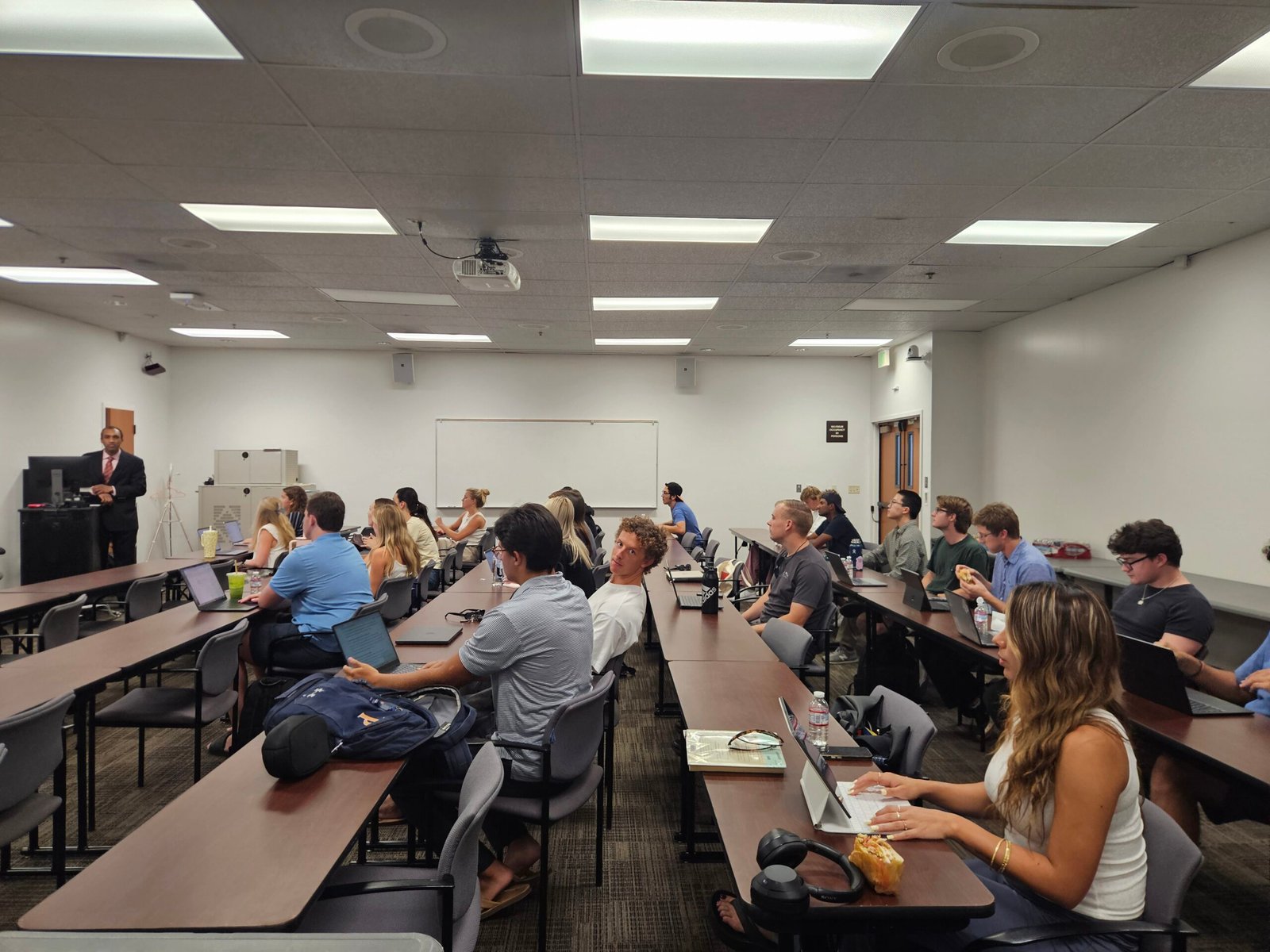
On March 19, 2026, the Pepperdine Economic Forum hosted a seminar in CCB 140 featuring Stone Washington, an economist at the U.S. Small Business Administration and a doctoral student at The George Washington University. The seminar examined how public policy is shaped through both external advocacy and internal decision making within federal institutions. Drawing on his professional experience in financial policy, Washington provided students with a two sided perspective on the policy process. He explained how advocacy organizations, nonprofit groups, and other stakeholders attempt to influence the policy agenda from outside government through lobbying, research dissemination, and legal advocacy. He then contrasted these external pressures with the internal mechanisms through which federal agencies evaluate proposals, develop regulations, and implement policy decisions.
A central part of the discussion focused on Washington’s doctoral research examining nonprofit advocacy organizations and the role of amicus curiae briefs in shaping legal and policy outcomes. He explained how these briefs allow outside groups to provide information and policy arguments to courts and regulators, thereby influencing institutional decision making. This discussion helped students understand how legal processes, advocacy networks, and bureaucratic institutions interact in the development of public policy. Students engaged actively during the seminar by asking questions about the role of economic analysis in policy formation, the influence of interest groups in regulatory processes, and the challenges faced by policymakers when balancing competing policy objectives. The seminar provided students with valuable insights into how economic ideas, institutional structures, and advocacy efforts combine to shape public policy in the United States.
Overall, the seminar provided students with a deeper understanding of the institutional dynamics of policymaking and highlighted the importance of economic analysis in government decision making. The event also strengthened the Pepperdine Economic Forum’s goal of connecting classroom
learning with practical insights from economists working in public policy.
Brazils Economy Through a Legal Lens: Growth, Institutional Evolution, and the Privacy Dimensions of Information Sharing
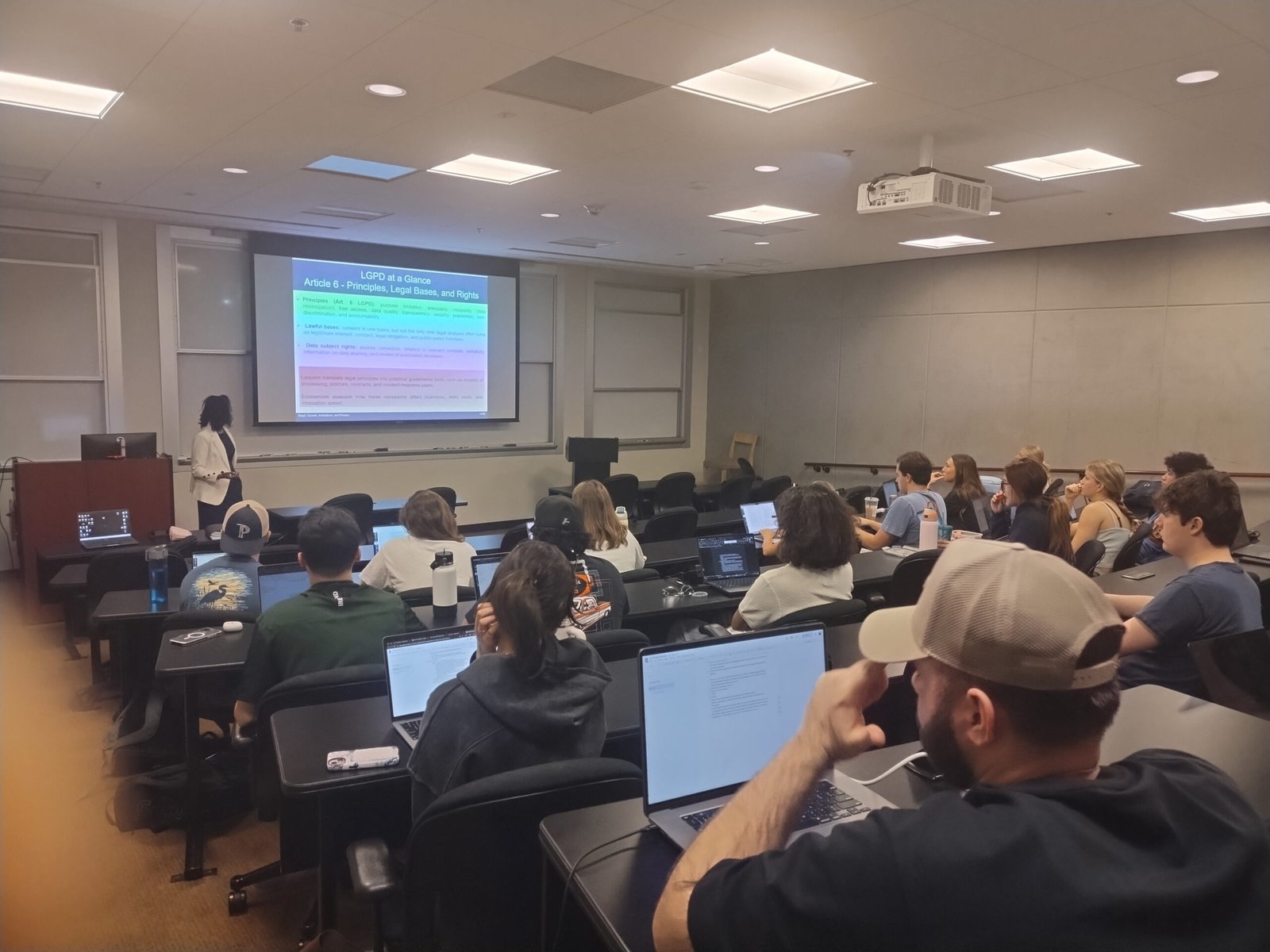
On February 27, 2026, Ana Paula Dos Santos, Esq., LL.M., Adjunct Professor at the University of the Pacific McGeorge School of Law, delivered a guest lecture in the Development Economics course at Pepperdine University titled Brazil’s Economy Through a Legal Lens: Growth, Institutional Evolution, and the Privacy Dimensions of Information Sharing. The lecture explored the relationship between legal institutions, economic development, and the governance of digital information in emerging economies. Professor Dos Santos discussed the historical evolution of Brazil’s economic institutions and the ways in which legal frameworks have shaped the country’s economic development. Particular attention was given to the interaction between regulatory systems, financial markets, and the institutional environment that supports economic growth. The lecture highlighted how legal rules governing information sharing, financial transparency, and data privacy increasingly influence modern economic systems.
A central component of the presentation examined Brazil’s data protection framework, including the development of the Lei Geral de Proteção de Dados (LGPD), Brazil’s comprehensive data protection law. The discussion emphasized how privacy regulations interact with financial technologies, digital platforms, and cross border data flows, raising important questions about the balance between economic innovation, institutional trust, and the protection of individual rights. Students engaged actively during the lecture by asking questions about the relationship between legal institutions and economic development, the implications of privacy regulation for digital financial systems, and the broader role of law in shaping market outcomes. The lecture provided an interdisciplinary perspective that connected economic theory with legal and institutional analysis, allowing students to better understand how regulatory frameworks influence economic activity in rapidly evolving digital economies.
Overall, the guest lecture enriched the Development Economics curriculum by exposing students to the institutional and legal dimensions of economic development. The session encouraged students to think critically about how legal frameworks, governance structures, and regulatory institutions
shape economic outcomes in emerging markets such as Brazil.

Free Markets and Banking in Africa: A Case of the Ghanaian Banking Industry
The Pepperdine Economic Forum hosted a seminar titled Free Markets and Banking in Africa: A Case of the Ghanaian Banking Industry on September 10, 2025. The seminar was delivered by Dr. Jerry Brenya Adjei, Head of Special Assets Management at the Bank of Africa in Ghana and a Doctor of Business Leadership from the Swiss Business School in Switzerland. The event brought together approximately thirty five undergraduate students, along with faculty members and university administrators, to discuss the evolution of financial markets and banking institutions in emerging African economies. Among those in attendance was Dr. Brian Newman, Divisional Dean of Social Science, whose presence reflected the university’s commitment to supporting academic dialogue and student engagement in global economic issues.
During the seminar, Dr. Adjei presented an overview of the Ghanaian banking sector, explaining how financial liberalization and regulatory reforms have shaped the development of banking institutions in Ghana over the past several decades. He discussed the role of market oriented reforms in strengthening financial intermediation, improving access to credit, and supporting private sector development. The presentation also examined challenges faced by banking institutions in emerging markets, including regulatory compliance, capital adequacy requirements, and the management of distressed assets.
Students actively engaged with the speaker during the discussion session that followed the presentation. As part of the learning component of the event, students were required to write a one page reflection describing what they learned from the seminar and offering any policy insights or comments related to the discussion. Many students submitted thoughtful and insightful reflections that demonstrated a strong understanding of the economic and institutional issues raised during the seminar. Following the seminar, the speaker was hosted for dinner with Dr. Brian Newman, Divisional Dean of Social Science, and Dr. Robert Williams, former Dean of Seaver College. The dinner provided an opportunity for further discussion on the development of financial systems in emerging economies, the role of universities in fostering international academic dialogue, and potential future collaborations between Pepperdine University and scholars working on African economic development.
Overall, the event was a success. It advanced the mission of the Pepperdine Economic Forum by exposing students to global economic policy issues and providing a platform for dialogue between practitioners and the academic community. The seminar also provided opportunity for students to engage with international perspectives on finance and economic development, particularly in the context of African markets.